skip to main content

Radiography (CA) Program

Use and maintain diagnostic equipment with hands-on radiologic technologist training.

20-25
monthsdepending on campus
ARRT
Certification Prep
10/2/26
Next start date

Want more details about the Radiography (CA) program?

By submitting this form, I provide my signature, expressly consenting to calls, prerecorded messages, emails and/or texts regarding my educational options from American Career College using an automated dialing system to the number and email address provided. I understand my consent is not required to enroll at American Career College, and that I can withdraw my consent at any time. To request information without consenting, please call 877-832-0790. I also understand that I may revoke my consent at any time in accordance with ACC's Opt-Out Disclaimer. All information provided is subject to ACC's Privacy Policy. (**Standard rates may apply.)

Disclaimer Consumer Notice I understand that if I no longer wish to receive text messages from ACC, I may revoke my consent at any time by texting back "Stop" to unsubscribe from the service. I understand that if I no longer wish to receive emails, I may revoke my consent at any time by clicking the "Unsubscribe" link within any email I receive from ACC. I understand I may revoke my consent to receive calls by informing any ACC associate calling me that I no longer want to receive calls from ACC. Personal Information you submit through our Sites, such as your name, address and other contact information, may be collected by American Career College for internal marketing and development purposes as well as to respond to your inquiry, complete a transaction for you, or fulfill other forms of customer service. You can choose not to receive marketing from us by "unsubscribing" using the instructions in any marketing email you receive from us.

*Required

Radiologic technologist programs prepare graduates to diagnose and treat patients using diagnostic imaging examinations.

Associate Degree in Radiography

Enroll in a Radiography program that helps prepare you for success. As a radiologic technologist—also known as an x-ray tech, radiographer, or full-scope technologist—you’ll combine your knowledge of the human body with your technical skills to capture images of what's going on inside your patients' bodies.

Blended Learning Format

This program is taught in a blended format combining online classes with in-person instruction.

Hands-On, Career-Focused Training

Earn your radiography associate degree and prepare for a rewarding career. Study human anatomy and work with complex equipment as you help support doctors and patients. Our training program helps prepare students for the ARRT (American Registry of Radiologic Technologists) exam.

Request Info

Find a Campus Near You

Looking for the right radiologic technologist school near you? ACC’s program is available at our three campuses across Southern California:

Program Approval

California program approved by the California Department of Public Health, Radiologic Health Branch (CDPH-RHB).
Apply Now Request Info Schedule an info session

Info Session

In ACC's Radiography (CA) Program, You'll Learn to:

Learn Learn Operating Equipment

Operate Equipment

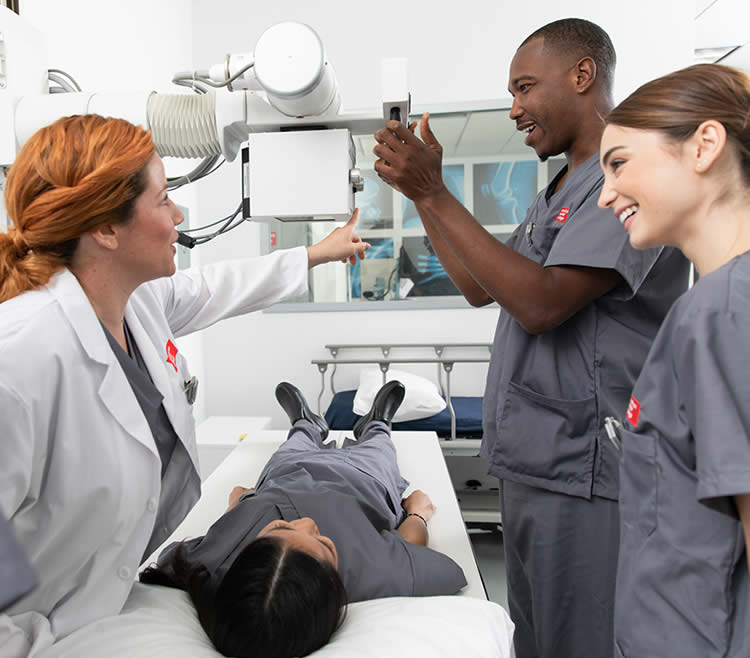
Learn to work digital X-ray equipment to capture images of your patients.

Learn about X-Ray Protection

Protect Patients from X-Rays

Protect patients by shielding exposed areas that do not need to be imaged.

Learn Body Positioning

Position Patients for Exams

Help position patients and the equipment in order to get the best possible image.

Radiography (CA) Course List

Learn more about what's in store for you in the Radiography (CA) associate of occupational science degree program. For more on radiography (ca) courses, visit the college catalog.

Term 1

Module Number

Title

Theory Hours

Skill Lab Hours

Clinical Hours

Total Hours

Quarter Credits

+ ANAT200 Introduction to Anatomy and Physiology 20 0 0 20 2.0

The purpose of this course is to understand the organization and general plan of the body and the importance of how the human body functions. This includes an introduction to the human body, chemical aspects of the life, cells, tissues, membranes, and the integumentary, skeletal, muscular, nervous, endocrine, cardiovascular, lymphatic, respiratory, digestive, urinary, and reproductive systems.

+ ANAT200-L Introduction to Anatomy and Physiology Lab 0 40 0 40 2.0

The purpose of this laboratory course is to develop an understanding of the organization and general plan of the body, maintaining homeostasis, and the importance of how the human body functions through applied and practical learning. Practical exposure to systems of study will include, but is not limited to: the study of cells and tissues, the integumentary, skeletal, muscular, nervous, endocrine, cardiovascular, lymphatic, respiratory, digestive, urinary, and reproductive systems. Concepts of development, metabolism, fluid and electrolyte balance, pregnancy, prenatal development, genetics and their impact on human movement and health are included. Laboratory learning activities will include identification of anatomical structures, surface anatomy, and their function and relationship to homeostasis.

+ MATH100 College Mathematics I 40 0 0 40 4.0

This course will cover mathematical logic, Boolean algebra, set theory, number abstractions, operations and their properties, monomials, polynomials, equations and inequalities.

+ RAD120 Introduction to Radiologic Sciences 10 0 0 10 1.0

This introductory course outlines the role of a radiologic technologist, the history of radiology, hospital and imaging department operations and exam reimbursement protocol. Students will be introduced to accreditation, certification, professional organizations, and the policies/regulations for the program.

+ RAD150 Medical Terminology 30 0 0 30 3.0

This course is an introduction to basic medical imaging terminology and prepares students for more advanced coursework in subsequent courses by providing an introduction to general medical imaging terminology. Students will study the roots, prefixes, suffixes, and abbreviations as well as general terms and their appropriate usage in medical imaging practice.


Totals

100

40

0

140

12.0

Term 2

Module Number

Title

Theory Hours

Skill Lab Hours

Clinical Hours

Total Hours

Quarter Credits

+ ENGL100 Written Communications I 40 0 0 40 4.0

This course provides instruction in the process of effective written communication for a variety of formats. It initially focuses on four basic areas of effective writing: unity, specifics, coherence, and grammar. The course will utilize reading, discussion and personal insight to increase students capacity to write simple paragraphs, formal essays, reports and research projects. Students will be equipped with techniques that facilitate creative, academic, and professional written communication. Additionally, students will be given library activities to enhance research skills.

+ RAD220 Radiographic Physics 30 0 0 30 3.0

This course provides the needed concepts of how a radiographic image is produced for diagnostic radiography, fluoroscopy, and mobile radiography. Atomic structure, magnetism, electricity and the circuitry of the x-ray unit are covered.

+ RAD250 Principles of Image Production 50 20 0 70 6.0

This course will provide a knowledge base about the factors of x-ray image creation, which will include the equipment accessories and exposure factors that affect the quality of a radiograph. Students will participate in laboratory experiments to enhance the comprehension of image creation concepts.


Totals

120

20

0

140

13.0

Term 3

Module Number

Title

Theory Hours

Skill Lab Hours

Clinical Hours

Total Hours

Quarter Credits

+ RAD320 Radiographic Positioning I 20 40 0 60 4.0

This course will provide the theory and laboratory practice for students to position patients for radiographic examinations of the respiratory system, abdomen, bony thorax, upper and lower extremities and related joints. Students will also be taught the use of proper radiation protection, and to analyze and critique the produced diagnostic images.

+ RAD350 Radiation Biology and Protection 50 20 0 70 6.0

This course will provide the concepts of proper radiation protection protocols for the general public and imaging personnel. Regulatory agencies, dosage, shielding, and radiation protection principles for radiography, mobile radiography, and fluoroscopy will be explained. Students will perform laboratory experiments to enforce the concepts taught.

+ RAD370 Digital Imaging 20 0 0 20 2.0

This course provides the base knowledge of computer/digital technology and the practical application of use within the radiologic field.


Totals

90

60

0

150

12.0

Term 4

Module Number

Title

Theory Hours

Skill Lab Hours

Clinical Hours

Total Hours

Quarter Credits

+ PSYC100 Introduction to Psychology 40 0 0 40 4.0

This course provides basic psychological concepts such as the nervous system, memory, intelligence, and development as well as Freudian, humanistic, social, cognitive, and trait theories.

+ RAD420 Patient Care 20 20 0 40 3.0

This course will provide the basic concepts and skills that are required for the appropriate standard of care for patients, which include communication, medical history documentation, and patient assistance. Students will demonstrate competence in taking vital signs and patient transfers. The importance of infection control and the technologists role in medical emergencies will be discussed.

+ RAD450 Radiographic Positioning II 20 40 0 60 4.0

This course will provide the theory and laboratory practice for students to position patients for radiographic examinations of the vertebral column, cranium, facial bones, and sinuses. Students will also be taught the use of proper radiation protection, and to analyze and critique the produced diagnostic images.

+ RAD470 Law and Ethics in Imaging 20 0 0 20 2.0

This course introduces the medico-legal and medical ethics principles of the healthcare profession specific to the imaging profession.


Totals

100

60

0

160

13.0

Term 5

Module Number

Title

Theory Hours

Skill Lab Hours

Clinical Hours

Total Hours

Quarter Credits

+ RAD500C Clinical Practicum I 0 0 300 300 10.0

This course is a practical application of the concurrent theoretical learning. Competency based assignments in thorax, abdomen, extremities, vertebral column, cranium, facial bones, and sinuses to include mobile radiography will be introduced under the supervision of certified Radiologic Technologists.

+ RAD520 Radiographic Positioning III 20 40 0 60 4.0

This course will provide the theory and laboratory practice for students to position patients for radiographic examinations of the gastrointestinal, genitourinary, and special procedures using contrast material. Students will also be taught the use of proper radiation protection, and to analyze and critique the produced diagnostic images.


Totals

20

40

300

360

14.0

Term 6

Module Number

Title

Theory Hours

Skill Lab Hours

Clinical Hours

Total Hours

Quarter Credits

+ RAD600C Clinical Practicum II 0 0 300 300 10.0

This course is a practical application of the concurrent theoretical learning. Competency based assignments in thorax, abdomen, and extremities, vertebral column, cranium, facial bones, and sinuses will continue and competency based assignments for gastrointestinal, genitourinary and special procedures with contrast will be introduced under the supervision of certified Radiologic Technologists.

+ RAD620 Pharmacology/Venipuncture 10 20 0 30 2.0

This course provides the basic methods for the administration of contrast material and the basic practices of venipuncture for the radiologic technologist. This course meets California Health and Safety Code, Section106985.


Totals

10

20

300

330

12.0

Term 7

Module Number

Title

Theory Hours

Skill Lab Hours

Clinical Hours

Total Hours

Quarter Credits

+ RAD700C Clinical Practicum III 0 0 300 300 10.0

This course is a practical application of the concurrent theoretical learning. Competency based assignments in thorax, abdomen, extremities, vertebral column, cranium, facial bones, sinuses, gastrointestinal, genitourinary and special procedures with contrast will continue and competency based assignments for mobile radiography, surgical and interventional procedures done under the supervision of certified Radiologic Technologists.

+ RAD720 Introduction to Computed Tomography with Cross Sectional Anatomy 40 0 0 40 4.0

This course provides the advanced student with an introduction to the principles and applications of computed tomography (CT) in the imaging department.


Totals

40

0

300

340

14.0

Term 8

Module Number

Title

Theory Hours

Skill Lab Hours

Clinical Hours

Total Hours

Quarter Credits

+ CAREER200 Career Advantage 20 0 0 20 2.0

Career Advantage is a course designed to prepare students to develop career planning and job search skills. Thorough, relevant job search preparation is required to compete successfully for jobs in today's market. To prepare the student, the course will address six areas: resumes, job search process, networking techniques in a job search, interview planning and preparation, communication and workplace skills.

+ RAD800C Clinical Practicum IV 0 0 300 300 10.0

This course is a practical application of all theoretical learning. Competency based assignments in thorax, abdomen, extremities, vertebral column, cranium, facial bones, sinuses, gastrointestinal, genitourinary and special procedures with contrast, mobile radiography, surgical and interventional procedures will continue under the supervision of certified Radiologic Technologists.


Totals

20

0

300

320

12.0

Term 9

Module Number

Title

Theory Hours

Skill Lab Hours

Clinical Hours

Total Hours

Quarter Credits

+ RAD900C Clinical Practicum V 0 0 300 300 10.0

This course is a practical application of all theoretical learning. Competency based assignments in thorax, abdomen, extremities, vertebral column, cranium, facial bones, sinuses, gastrointestinal, genitourinary and special procedures with contrast, mobile radiography, surgical and interventional procedures will continue as well as clinical assignments for observing Computed Tomography (CT) under the supervision of certified Radiologic Technologists.

+ RADSEM1 Radiology Seminar I 30 0 0 30 3.0

This course is a review of the content specifications that are critical for the American Registry of Radiologic Technologists (ARRT) certification examination.


Totals

30

0

300

330

13.0

Term 10

Module Number

Title

Theory Hours

Skill Lab Hours

Clinical Hours

Total Hours

Quarter Credits

+ RAD100C Clinical Practicum VI 0 0 360 360 12.0

This course is a practical application of all theoretical learning. Competency based assignments in thorax, abdomen, extremities, vertebral column, cranium, facial bones, sinuses, gastrointestinal, genitourinary and special procedures with contrast, mobile radiography, surgical and interventional procedures will continue as well as clinical assignments for observing Computed Tomography (CT), Magnetic Resonance Imaging (MRI), under the supervision of certified Radiologic Technologists. Clinical rotation for observing additional imaging modalities will be assigned. Additional imaging modalities will include ultrasound, mammography, radiation therapy, and nuclear medicine.

+ RADSEM2 Radiology Seminar II 30 0 0 30 3.0

This course is a review of the content specifications that are critical for the American Registry of Radiologic Technologists (ARRT) certification examination.


Totals

30

0

360

390

15.0

Term 1

+ Module Number: ANAT200 (View Description)

The purpose of this course is to understand the organization and general plan of the body and the importance of how the human body functions. This includes an introduction to the human body, chemical aspects of the life, cells, tissues, membranes, and the integumentary, skeletal, muscular, nervous, endocrine, cardiovascular, lymphatic, respiratory, digestive, urinary, and reproductive systems.

Title Introduction to Anatomy and Physiology
Theory Hours 20
Skill Lab Hours 0
Clinical Hours 0
Total Hours 20
Quarter Credits 2.0
+ Module Number: ANAT200-L (View Description)

The purpose of this laboratory course is to develop an understanding of the organization and general plan of the body, maintaining homeostasis, and the importance of how the human body functions through applied and practical learning. Practical exposure to systems of study will include, but is not limited to: the study of cells and tissues, the integumentary, skeletal, muscular, nervous, endocrine, cardiovascular, lymphatic, respiratory, digestive, urinary, and reproductive systems. Concepts of development, metabolism, fluid and electrolyte balance, pregnancy, prenatal development, genetics and their impact on human movement and health are included. Laboratory learning activities will include identification of anatomical structures, surface anatomy, and their function and relationship to homeostasis.

Title Introduction to Anatomy and Physiology Lab
Theory Hours 0
Skill Lab Hours 40
Clinical Hours 0
Total Hours 40
Quarter Credits 2.0
+ Module Number: MATH100 (View Description)

This course will cover mathematical logic, Boolean algebra, set theory, number abstractions, operations and their properties, monomials, polynomials, equations and inequalities.

Title College Mathematics I
Theory Hours 40
Skill Lab Hours 0
Clinical Hours 0
Total Hours 40
Quarter Credits 4.0
+ Module Number: RAD120 (View Description)

This introductory course outlines the role of a radiologic technologist, the history of radiology, hospital and imaging department operations and exam reimbursement protocol. Students will be introduced to accreditation, certification, professional organizations, and the policies/regulations for the program.

Title Introduction to Radiologic Sciences
Theory Hours 10
Skill Lab Hours 0
Clinical Hours 0
Total Hours 10
Quarter Credits 1.0
+ Module Number: RAD150 (View Description)

This course is an introduction to basic medical imaging terminology and prepares students for more advanced coursework in subsequent courses by providing an introduction to general medical imaging terminology. Students will study the roots, prefixes, suffixes, and abbreviations as well as general terms and their appropriate usage in medical imaging practice.

Title Medical Terminology
Theory Hours 30
Skill Lab Hours 0
Clinical Hours 0
Total Hours 30
Quarter Credits 3.0

TOTALS

Theory Hours

100

Skill Lab Hours

40

Clinical Hours

0

Total Hours<

140

Quarter Credits

12.0

Term 2

+ Module Number: ENGL100 (View Description)

This course provides instruction in the process of effective written communication for a variety of formats. It initially focuses on four basic areas of effective writing: unity, specifics, coherence, and grammar. The course will utilize reading, discussion and personal insight to increase students capacity to write simple paragraphs, formal essays, reports and research projects. Students will be equipped with techniques that facilitate creative, academic, and professional written communication. Additionally, students will be given library activities to enhance research skills.

Title Written Communications I
Theory Hours 40
Skill Lab Hours 0
Clinical Hours 0
Total Hours 40
Quarter Credits 4.0
+ Module Number: RAD220 (View Description)

This course provides the needed concepts of how a radiographic image is produced for diagnostic radiography, fluoroscopy, and mobile radiography. Atomic structure, magnetism, electricity and the circuitry of the x-ray unit are covered.

Title Radiographic Physics
Theory Hours 30
Skill Lab Hours 0
Clinical Hours 0
Total Hours 30
Quarter Credits 3.0
+ Module Number: RAD250 (View Description)

This course will provide a knowledge base about the factors of x-ray image creation, which will include the equipment accessories and exposure factors that affect the quality of a radiograph. Students will participate in laboratory experiments to enhance the comprehension of image creation concepts.

Title Principles of Image Production
Theory Hours 50
Skill Lab Hours 20
Clinical Hours 0
Total Hours 70
Quarter Credits 6.0

TOTALS

Theory Hours

120

Skill Lab Hours

20

Clinical Hours

0

Total Hours<

140

Quarter Credits

13.0

Term 3

+ Module Number: RAD320 (View Description)

This course will provide the theory and laboratory practice for students to position patients for radiographic examinations of the respiratory system, abdomen, bony thorax, upper and lower extremities and related joints. Students will also be taught the use of proper radiation protection, and to analyze and critique the produced diagnostic images.

Title Radiographic Positioning I
Theory Hours 20
Skill Lab Hours 40
Clinical Hours 0
Total Hours 60
Quarter Credits 4.0
+ Module Number: RAD350 (View Description)

This course will provide the concepts of proper radiation protection protocols for the general public and imaging personnel. Regulatory agencies, dosage, shielding, and radiation protection principles for radiography, mobile radiography, and fluoroscopy will be explained. Students will perform laboratory experiments to enforce the concepts taught.

Title Radiation Biology and Protection
Theory Hours 50
Skill Lab Hours 20
Clinical Hours 0
Total Hours 70
Quarter Credits 6.0
+ Module Number: RAD370 (View Description)

This course provides the base knowledge of computer/digital technology and the practical application of use within the radiologic field.

Title Digital Imaging
Theory Hours 20
Skill Lab Hours 0
Clinical Hours 0
Total Hours 20
Quarter Credits 2.0

TOTALS

Theory Hours

90

Skill Lab Hours

60

Clinical Hours

0

Total Hours<

150

Quarter Credits

12.0

Term 4

+ Module Number: PSYC100 (View Description)

This course provides basic psychological concepts such as the nervous system, memory, intelligence, and development as well as Freudian, humanistic, social, cognitive, and trait theories.

Title Introduction to Psychology
Theory Hours 40
Skill Lab Hours 0
Clinical Hours 0
Total Hours 40
Quarter Credits 4.0
+ Module Number: RAD420 (View Description)

This course will provide the basic concepts and skills that are required for the appropriate standard of care for patients, which include communication, medical history documentation, and patient assistance. Students will demonstrate competence in taking vital signs and patient transfers. The importance of infection control and the technologists role in medical emergencies will be discussed.

Title Patient Care
Theory Hours 20
Skill Lab Hours 20
Clinical Hours 0
Total Hours 40
Quarter Credits 3.0
+ Module Number: RAD450 (View Description)

This course will provide the theory and laboratory practice for students to position patients for radiographic examinations of the vertebral column, cranium, facial bones, and sinuses. Students will also be taught the use of proper radiation protection, and to analyze and critique the produced diagnostic images.

Title Radiographic Positioning II
Theory Hours 20
Skill Lab Hours 40
Clinical Hours 0
Total Hours 60
Quarter Credits 4.0
+ Module Number: RAD470 (View Description)

This course introduces the medico-legal and medical ethics principles of the healthcare profession specific to the imaging profession.

Title Law and Ethics in Imaging
Theory Hours 20
Skill Lab Hours 0
Clinical Hours 0
Total Hours 20
Quarter Credits 2.0

TOTALS

Theory Hours

100

Skill Lab Hours

60

Clinical Hours

0

Total Hours<

160

Quarter Credits

13.0

Term 5

+ Module Number: RAD500C (View Description)

This course is a practical application of the concurrent theoretical learning. Competency based assignments in thorax, abdomen, extremities, vertebral column, cranium, facial bones, and sinuses to include mobile radiography will be introduced under the supervision of certified Radiologic Technologists.

Title Clinical Practicum I
Theory Hours 0
Skill Lab Hours 0
Clinical Hours 300
Total Hours 300
Quarter Credits 10.0
+ Module Number: RAD520 (View Description)

This course will provide the theory and laboratory practice for students to position patients for radiographic examinations of the gastrointestinal, genitourinary, and special procedures using contrast material. Students will also be taught the use of proper radiation protection, and to analyze and critique the produced diagnostic images.

Title Radiographic Positioning III
Theory Hours 20
Skill Lab Hours 40
Clinical Hours 0
Total Hours 60
Quarter Credits 4.0

TOTALS

Theory Hours

20

Skill Lab Hours

40

Clinical Hours

300

Total Hours<

360

Quarter Credits

14.0

Term 6

+ Module Number: RAD600C (View Description)

This course is a practical application of the concurrent theoretical learning. Competency based assignments in thorax, abdomen, and extremities, vertebral column, cranium, facial bones, and sinuses will continue and competency based assignments for gastrointestinal, genitourinary and special procedures with contrast will be introduced under the supervision of certified Radiologic Technologists.

Title Clinical Practicum II
Theory Hours 0
Skill Lab Hours 0
Clinical Hours 300
Total Hours 300
Quarter Credits 10.0
+ Module Number: RAD620 (View Description)

This course provides the basic methods for the administration of contrast material and the basic practices of venipuncture for the radiologic technologist. This course meets California Health and Safety Code, Section106985.

Title Pharmacology/Venipuncture
Theory Hours 10
Skill Lab Hours 20
Clinical Hours 0
Total Hours 30
Quarter Credits 2.0

TOTALS

Theory Hours

10

Skill Lab Hours

20

Clinical Hours

300

Total Hours<

330

Quarter Credits

12.0

Term 7

+ Module Number: RAD700C (View Description)

This course is a practical application of the concurrent theoretical learning. Competency based assignments in thorax, abdomen, extremities, vertebral column, cranium, facial bones, sinuses, gastrointestinal, genitourinary and special procedures with contrast will continue and competency based assignments for mobile radiography, surgical and interventional procedures done under the supervision of certified Radiologic Technologists.

Title Clinical Practicum III
Theory Hours 0
Skill Lab Hours 0
Clinical Hours 300
Total Hours 300
Quarter Credits 10.0
+ Module Number: RAD720 (View Description)

This course provides the advanced student with an introduction to the principles and applications of computed tomography (CT) in the imaging department.

Title Introduction to Computed Tomography with Cross Sectional Anatomy
Theory Hours 40
Skill Lab Hours 0
Clinical Hours 0
Total Hours 40
Quarter Credits 4.0

TOTALS

Theory Hours

40

Skill Lab Hours

0

Clinical Hours

300

Total Hours<

340

Quarter Credits

14.0

Term 8

+ Module Number: CAREER200 (View Description)

Career Advantage is a course designed to prepare students to develop career planning and job search skills. Thorough, relevant job search preparation is required to compete successfully for jobs in today's market. To prepare the student, the course will address six areas: resumes, job search process, networking techniques in a job search, interview planning and preparation, communication and workplace skills.

Title Career Advantage
Theory Hours 20
Skill Lab Hours 0
Clinical Hours 0
Total Hours 20
Quarter Credits 2.0
+ Module Number: RAD800C (View Description)

This course is a practical application of all theoretical learning. Competency based assignments in thorax, abdomen, extremities, vertebral column, cranium, facial bones, sinuses, gastrointestinal, genitourinary and special procedures with contrast, mobile radiography, surgical and interventional procedures will continue under the supervision of certified Radiologic Technologists.

Title Clinical Practicum IV
Theory Hours 0
Skill Lab Hours 0
Clinical Hours 300
Total Hours 300
Quarter Credits 10.0

TOTALS

Theory Hours

20

Skill Lab Hours

0

Clinical Hours

300

Total Hours<

320

Quarter Credits

12.0

Term 9

+ Module Number: RAD900C (View Description)

This course is a practical application of all theoretical learning. Competency based assignments in thorax, abdomen, extremities, vertebral column, cranium, facial bones, sinuses, gastrointestinal, genitourinary and special procedures with contrast, mobile radiography, surgical and interventional procedures will continue as well as clinical assignments for observing Computed Tomography (CT) under the supervision of certified Radiologic Technologists.

Title Clinical Practicum V
Theory Hours 0
Skill Lab Hours 0
Clinical Hours 300
Total Hours 300
Quarter Credits 10.0
+ Module Number: RADSEM1 (View Description)

This course is a review of the content specifications that are critical for the American Registry of Radiologic Technologists (ARRT) certification examination.

Title Radiology Seminar I
Theory Hours 30
Skill Lab Hours 0
Clinical Hours 0
Total Hours 30
Quarter Credits 3.0

TOTALS

Theory Hours

30

Skill Lab Hours

0

Clinical Hours

300

Total Hours<

330

Quarter Credits

13.0

Term 10

+ Module Number: RAD100C (View Description)

This course is a practical application of all theoretical learning. Competency based assignments in thorax, abdomen, extremities, vertebral column, cranium, facial bones, sinuses, gastrointestinal, genitourinary and special procedures with contrast, mobile radiography, surgical and interventional procedures will continue as well as clinical assignments for observing Computed Tomography (CT), Magnetic Resonance Imaging (MRI), under the supervision of certified Radiologic Technologists. Clinical rotation for observing additional imaging modalities will be assigned. Additional imaging modalities will include ultrasound, mammography, radiation therapy, and nuclear medicine.

Title Clinical Practicum VI
Theory Hours 0
Skill Lab Hours 0
Clinical Hours 360
Total Hours 360
Quarter Credits 12.0
+ Module Number: RADSEM2 (View Description)

This course is a review of the content specifications that are critical for the American Registry of Radiologic Technologists (ARRT) certification examination.

Title Radiology Seminar II
Theory Hours 30
Skill Lab Hours 0
Clinical Hours 0
Total Hours 30
Quarter Credits 3.0

TOTALS

Theory Hours

30

Skill Lab Hours

0

Clinical Hours

360

Total Hours<

390

Quarter Credits

15.0


Program Overview

Radiography (CA)

Radiography Program Overview

In as little as 20 months (DFW) or 25 months (California), ACC’s Radiography Program is designed to provide students with a solid foundation in radiographic techniques, patient care and medical imaging technology. Offered at our four campuses in Los Angeles, Ontario, Anaheim, and Dallas-Fort Worth, the radiography training curriculum is routinely updated to align with the latest advancements in radiology, ensuring that students are prepared to meet the demands of modern healthcare settings.

The goal of radiologic technologist school is to graduate professionals that enthusiastically display leadership responsibilities while providing competent care. ACC accomplishes this by:

  • Providing access to activities that foster community awareness while responding to the needs of the community
  • Ensuring that the standards required for approval of the College and the program are maintained
  • Supporting the community of radiologic technologists and healthcare professionals by providing opportunities for professional development

ACC helps program graduates earn their radiography associate degree and prepare to provide compassionate patient care.

Program Highlights

Highlights

ACC’s Program

Approved by CDPH-RHB (California) and THECB (Texas)

Blended learning (online + on campus)

Complete in as little as 20 months (DFW) or 25 months (California)

Over 1,000-hours real-world clinicals

Eligible for ARRT exam

Career services support

Campuses in California (Los Angeles, Anaheim, and Ontario) and Texas (Dallas-Fort Worth)

Financial aid and scholarships available for those who qualify

Graduate resources and alumni network

ARRT Certification Prep

Graduates of ACC’s Radiography program are eligible to sit for the ARRT Radiography certification exam, a key step toward becoming a registered radiologic technologist. Our curriculum is designed to provide comprehensive academic and clinical preparation for each student to have a successful result on the ARRT certification and registration exam.

Approval

The Radiography (Associate of Occupational Science) program at the Los Angeles, Orange County, and Ontario campuses is approved by the California Department of Public Health, Radiologic Health Branch (CDPH-RHB). Department of Public Health Radiologic Health Branch 1500 Capitol Avenue, 5th Floor, MS 7610, Sacramento, CA 95814-5006; Phone: 916-327-5106 / Fax: 916-440-7999 / www.cdph.ca.gov

Effective 4/27/26, the Associate of Applied Science in Radiography program at the American Career College – Dallas-Fort Worth campus has been approved by the Accrediting Bureau of Health Education Schools (ABHES) (6116 Executive Blvd., Suite 730, North Bethesda, MD 20852; phone: 301-291-7550; email: info@abhes.org).

Program approval shows that the curriculum meets state and professional standards, giving students the eligibility to sit for licensure and certification exams and helping them prepare for real-world practice as radiologic technologists.

Radiography Program Prerequisites

To enroll in the Radiography program at ACC, applicants must:

  • Pass a standardized entrance exam. Refer to the Standardized Entrance Testing Policy page for more information.
  • Complete an interview with a program faculty member and/or the program director.

For more, review ACC’s admission requirements for associate degree programs page.

Schedule an info session

The Info You Need — All in One Place

Download the Radiography Associate Program Brochure!

Looking for more information about what ACC's Radiography training program has to offer? Our brochure has important details about the program including:

  • Program curriculum and course highlights
  • Accreditation
  • Enrollment requirements
  • And more!

Download the brochure to explore everything that ACC’s Radiography program has to offer and take the next step toward your future in healthcare.

Click here to download brochure

Download Brochure
Download

From lectures to real-world experience, our ACC programs are designed with your career in mind.

Apply Now

From lectures to labs, our ACC curriculum is designed with you in mind.

FAQs

What does a radiologic technologist do?

Radiologic technologists are responsible for maintaining and operating the equipment that takes effective x-rays and other diagnostic imaging examinations. They work hands-on with patients to ensure that their doctors see what they need to see.

Here are some things a radiologic technologist does:

  • Prepare patients for examinations
  • Explain procedures and positions
  • Ensure that areas not being X-rayed are covered with protective shields
  • Perform X-rays
  • Operate, adjust, and maintain equipment1

1California Employment Development Department Detailed Guide, Radiologic Technologists and Technicians in California

Am I a good fit for the Radiography program?

If you love working with technical equipment and enjoy working directly with people, our Radiography program might be right for you.

Here are some of the top skills and attributes that make for a great radiologic technologist:

Active listening – A good radiologic technologist listens to their patients and understands their needs and concerns.

Communication – Because radiologic technologists work directly with patients, they must be able to communicate effectively with them, explaining the postures and procedures used during imaging.

Operations monitoring – Radiologic technologists should be able to monitor any relevant machinery, including watching gauges, dials or other indicators.

Customer and personal service – Radiologic technologists work directly with patients. Having good customer and personal service skills helps them provide better care.

Service orientation – A great radiologic technologist has a passion for helping patients and for providing the best care possible.

Where do radiologic technologists work?

Radiologic technologists can work in a variety of settings, including:

  • Hospitals
  • Medical clinics
  • Medical laboratories1

1California Employment Development Department Detailed Guide, Radiologic Technologists and Technicians in California

What will I learn in the Radiologic Technologist program?

Course content and sequence varies by campus (California vs. DFW). The Radiography program includes general education courses such as anatomy and physiology, communications, mathematics, humanities, and psychology, along with core radiography coursework in patient care, imaging procedures, radiation safety, and clinical training.

Students also complete multiple clinical practicums and advanced coursework such as digital imaging, radiographic positioning, and imaging technology.

For a complete and campus-specific course list, refer to the ACC Catalog.

How long is the Radiography program?

Time to completion depends on campus and other factors. At our ACC-DFW campus, students can earn their radiography associate degree in as little as 20 months. At our three Southern California campuses, students can earn their degree in as little as 25 months.

How much does the Radiography program cost?

Our admissions advisors and financial aid advisors are here to support you. To learn more about ACC’s Radiography program cost, access our tuition info.

Is financial aid available for radiologic tech school?

Yes, financial aid and scholarships are available for those who qualify. An ACC Financial Aid Advisor can assist you in identifying options to help fund your education.

Will I get real-world radiography training?

Yes! ACC's Radiography program includes a hands-on clinical practicum that gives students the opportunity to demonstrate and reinforce the knowledge and skills they acquired learning hands-on throughout the training program.

Students at our Dallas-Fort Worth campus complete over 1,000 clinical hours while students at any of our Southern California campuses complete over 1,800 clinical hours.

Can I get certified?

ACC’s radiologic technologist curriculum is designed to help prepare students for the ARRT (American Registry of Radiologic Technologists) exam.

Is the Radiography program offered online or in the evenings?

No. The Radiography program is delivered as a daytime, in-person experience. Clinical components require on-site participation, and the curriculum is structured to ensure all hands-on learning takes place under direct supervision in a lab or clinical setting.

Radiography (CA)
Be ready for your first day on the job.

Our classes are career-focused on the practical skills you need to be successful at your career. Get a well-rounded experience from in-class, lab and clinical hours as you work toward your degree.

Schedule an info session

Career Guides

How to Become a Radiologic Technologist

Radiologic technologist, radiographer, x-ray tech — no matter what the job is called, it's a role that is essential for the effective care of patients.

Read our California-specific guide or Texas-specific guide.

Want more details about the Radiography (CA) program?

By submitting this form, I provide my signature, expressly consenting to calls, prerecorded messages, emails and/or texts regarding my educational options from American Career College using an automated dialing system to the number and email address provided. I understand my consent is not required to enroll at American Career College, and that I can withdraw my consent at any time. To request information without consenting, please call 877-832-0790. I also understand that I may revoke my consent at any time in accordance with ACC's Opt-Out Disclaimer. All information provided is subject to ACC's Privacy Policy. (**Standard rates may apply.)

Disclaimer Consumer Notice I understand that if I no longer wish to receive text messages from ACC, I may revoke my consent at any time by texting back "Stop" to unsubscribe from the service. I understand that if I no longer wish to receive emails, I may revoke my consent at any time by clicking the "Unsubscribe" link within any email I receive from ACC. I understand I may revoke my consent to receive calls by informing any ACC associate calling me that I no longer want to receive calls from ACC. Personal Information you submit through our Sites, such as your name, address and other contact information, may be collected by American Career College for internal marketing and development purposes as well as to respond to your inquiry, complete a transaction for you, or fulfill other forms of customer service. You can choose not to receive marketing from us by "unsubscribing" using the instructions in any marketing email you receive from us.

*Required

Voted Best Career College in the 2025 Inland Valley Daily Bulletin Readers Choice Awards

Ontario Campus: Voted Best Career College in the 2025 Inland Valley Daily Bulletin Readers Choice Awards.

Voted Best Career College in the 2025 LA Daily News Readers Choice Awards.

LA Campus: Voted Best Career College in the 2025 LA Daily News Readers Choice Awards.

Voted Best Career College in the 2025 San Gabriel Valley Tribune Readers Choice Awards.

OC Campus: Voted Best Career College in the 2025 San Gabriel Valley Tribune Readers Choice Awards.

Scroll to the top
Call Us